


















“We will open prison doors and watch thousands who were unjustly detained step into the warm sun, embraced at last by those who never stopped fighting for them” says Venezuelan politician María Corina Machado – the Nobel Peace Prize winner of 2025.
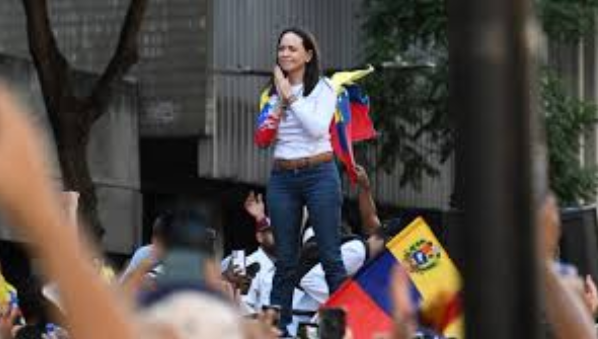
Primarily for her work and efforts in fighting the current-dictatorship status in Venezuela, her courageous presence when combating this injustice, and being an overall inspiration for people facing oppression around the globe.
But also for the rest of Latin America, Machado is a symbol of hope, an unwavering sign of courage, and the symbol of unifying leadership in a scene of darkness.
With an industrial engineering degree and a master’s degree in finance, she began her political career by founding the vote-monitoring organization, Súmate.
The non-government organization is aimed to promote the freedom included in citizen’s political rights and to promote, defend, facilitate, and back the rights accorded by the Constitution of Venezuela. Some projects include a national
network of volunteers, analysis of voter registration, planning and implementation of parallel vote counts to enhance the confidence in the electoral progress, and also benefiting educational programs.
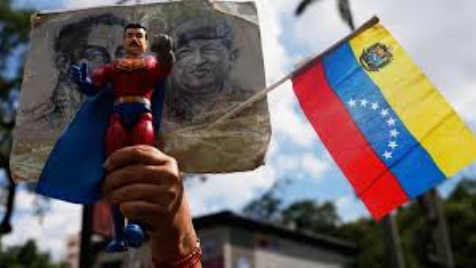
Hugo Chávez was elected the President of Venezuela in 1998 – with a participation of 64% in voting. Under his presidency, a new Constitution of Venezuela was put into effect, allowing Chávez to run for president once again, under a 6-year term. He ran again in 2000 as well as 2006. Which would have resulted in his overall presidency lasting 14 years.
As a consequence, people began straying away from the polls during elections. So, Machado’s Súmate had the motivation to achieve a high level of voting participation throughout Venezuela.
With the Washington Post, Machado said, “Something clicked. I had this unsettling feeling that I could not stay at home and watch the country get polarized and collapse… We had to keep the electoral progress but change the course, to give Venezuelans the chance to count ourselves, to dissipate tensions before they build up. It was a choice of ballots over bullets.”.
When the organization was first created, it consisted of a group of professionals, but by 2004, it grew to an addition of 30,000 volunteers from across Venezuela, beyond.
 Before Machado stepped into the direction of political rights, she and her mother founded the Atenea Foundation in 1992. The Atenea Foundation is dedicated to supporting children living in poverty in Caracas. This organization marked her shift from philanthropy to fighting political battles within the country’s government.
Her efforts and experience in the fields of poverty and the political struggles in Venezuela highlights the link between the two, and how her presence in the collective efforts made an unprecedented impact on the country.
As the Nobel Prize ceremony is typically held in Oslo, Norway, in the Oslo City Hall, the public is not sure if Machado will be present during the award ceremony. Kristian Berg Harpviken (the head of the Nobel Institute) says, “given the security station, we cannot say anything more about when and how she will be arriving.” (NY Times).
While Machado is not in the political spotlight, like in protests and speeches, she is confined to hide from the government in a discreet location. Which might limit her ability to attend the ceremony.
The Venezuelan government says that she will be considered a fugitive if she were to leave the country, and it is unclear whether the authorities will unrest her upon return.
However, it seems like she is willing to take that risk.
While the award is signed with her name, she dedicates the award to democracy in general.
Dictatorships have been on the rise across the world, now more than ever, meaning the loss in human voice – only to another human being. The award was dedicated to her work on the grounds of Venezuela, but also to those fighting this sense of opposition globally and how these efforts can make a difference.
No matter how difficult it may seem when fighting someone ‘superior’.
The Nobel Institute grants María Corina Machado with this year’s Nobel Peace Prize “for her tireless work promoting democratic rights for the people of Venezuela and for her struggle to achieve a just and peaceful transition from dictatorship to democracy,” and that she is “a woman who keeps the flame of democracy alive amid a growing darkness.” (Nobelprize.org).
(Update: Jan. 2026) As of recently, the United States has captured Venezuela’s current president, Nicolás Maduro, as well as his wife.
This was done in hopes of forcing Maduro to “face crimes related to corruption that it says led to massive amounts of drugs flowing into the U.S.” says CBC in quoting the Trump Administration.
Since this event, it has further been revealed to the public how Maduro has rigged elections, imposed infringements on human rights (including the rights to protest), and steering his country into food shortages and economic failure.
The Venezuelans who accused Maduro of fraud (thousands) were promptly imprisoned.
While in a court appearance, Maduro and his wife both pleaded not guilty, and his lawyer states that he can not be prosecuted because he is a sovereign head of state.
In response to the series of events, Machado has since spoken out to the people of Venezuela to serve as an act of unity and hope in a time of both joy, but also disaster.
“Today we are prepared to enforce our mandate and take power. Let us remain vigilant, active, and organized until the Democratic Transition is finalized. A transition that needs all of us.” she says.
While the positions of the argument, on the idea of America capturing the Venezuelan President, are sharply divided, many citizens have viewed the happenings as a signal of justice and hope, accountability, and the end of the country’s harsh political regime.